
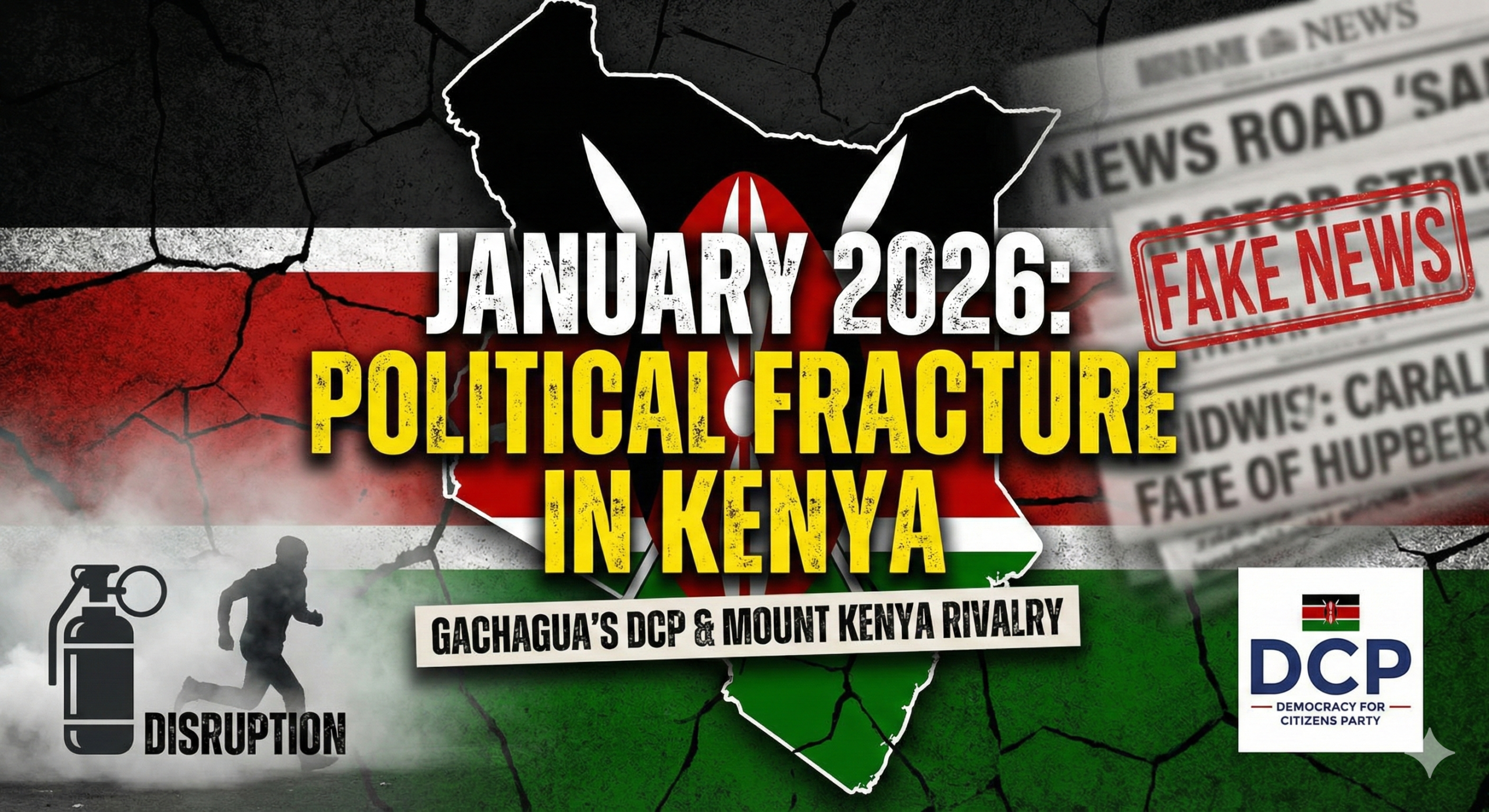
Churches, Gas, and Power: How Gachagua’s January Shock Rewrote Mount Kenya Politics
Table of Contents
- The Sunday That Refused Silence
- Witima ACK and the Meaning of a Pulpit
- Flight Through Bushes and the Language of Fear
- Accusation as Political Currency
- Ruto’s State and the Weight of Denial
- DCP and the Reordering of Loyalty
- Fake Headlines, Real Damage
- Mount Kenya Without a Single Center
- Faith Spaces as Political Ground
- January’s Echo Inside 2027
The Sunday That Refused Silence
January 2026 arrived quietly, then broke its own calm. A church service, expected to follow hymn and prayer, became the scene that now anchors national argument. Former Deputy President Rigathi Gachagua walked into worship as a political figure carrying fresh ambition. He walked out as a man claiming his life had been marked for erasure.
Stories from that morning spread before evening fell. Congregants spoke in lowered tones. Youth replayed short clips on phones. Elders argued over what they had seen with their own eyes. The country did not wait for official words. The images had already hardened.
This was not street protest. This was not a rally. This was a pew-filled room where silence usually carries weight. That detail stuck. Politics had crossed into a space many Kenyans treat as protected ground.
Witima ACK and the Meaning of a Pulpit
The setting mattered. Witima ACK Church sits in Othaya, a place woven into Mount Kenya’s political memory. Clergy there are used to hosting leaders. Sermons have long brushed against public life.
That Sunday crossed a line few expected. Masked figures appeared. Tear gas cut through prayer. Gunfire, reported by witnesses as live rounds, scattered worshippers. The service did not end. It collapsed.
Older members later spoke of confusion rather than panic. Younger ones described rage. Church leaders faced pressure from all sides. Some wanted the pulpit closed to politicians. Others said silence would serve power.
Flight Through Bushes and the Language of Fear
Accounts agree on one detail that no press statement could soften. Gachagua ran. Security cordons failed. Escape came through thickets and uneven ground. A former second-in-command fled like an outlaw.
That image traveled faster than speeches. Supporters framed it as proof of threat. Critics dismissed it as theater. Neutral observers fixated on the collapse of order. The state looked clumsy. The opposition looked hunted.
Fear does not need confirmation to function. It only needs repetition. By nightfall, the story had already moved from church to kitchen tables, from WhatsApp groups to vernacular radio.
Accusation as Political Currency
Days later, Gachagua named the hand he believed guided the chaos. He accused President William Ruto of plotting his killing. No soft wording. No legal hedging. A direct charge spoken into microphones.
Such an accusation changes terrain. It forces response. It freezes allies who fear choosing sides too early. It hardens followers who already sense betrayal. Words became weapons.
Kenyan politics has long thrived on suggestion. This was something else. A claim of state-backed violence, delivered without pause, placed blood on the table whether proven or not.
Ruto’s State and the Weight of Denial
Government response came through officials rather than the President himself. Investigations were announced. Condemnations followed. The language leaned procedural.
That distance spoke loudly. Supporters of the state said restraint showed maturity. Gachagua’s camp read avoidance as guilt. The gap between those readings widened.
Security agencies now carried a burden they did not ask for. Any finding would be read as political. Any delay fed suspicion. Authority found itself trapped by its own uniform.
DCP and the Reordering of Loyalty
Behind the smoke lay a quieter shift. Gachagua’s Democracy for Citizens Party had begun pulling crowds even before January. Church visits doubled as party tests. The disruption did not weaken that pull. It sharpened it.
Local leaders started speaking differently. Some praised courage. Others warned against haste. Meetings once predictable turned tense. Old alliances showed strain.
The party offered language many in the region felt had been taken from them. Ownership. Voice. Separation from Nairobi command. That message did not require advertising. January gave it oxygen.
Fake Headlines, Real Damage
Soon came the paper ghosts. Fabricated front pages. Claims that DCP had collapsed. Claims that its founder had fled. Claims that supporters had defected en masse.
None held under scrutiny. All spread widely. Disinformation did not seek belief. It sought fatigue. Confusion served its task.
The effort revealed fear more than strength. False collapse stories only circulate when real momentum exists. The tactic showed how badly narrative control mattered as elections edged closer.
Mount Kenya Without a Single Center
The region once moved as a block. Elders spoke. Voters followed. That order has thinned. January exposed fractures already present.
Some leaders stayed loyal to State House. Others tested distance. Younger voters rejected inherited alignments. Gachagua’s break from power did not create the split. It made it visible.
Mount Kenya now hosts competing claims of legitimacy. No single voice commands silence. Every gathering risks becoming a contest.
Faith Spaces as Political Ground
Churches now sit at the fault line. Clergy face demands to choose neutrality or relevance. Congregations arrive carrying party colors inside hymn books.
January forced a reckoning. Faith spaces can no longer assume insulation from force. Gas does not respect stained glass.
Some pastors now restrict political visits. Others invite them openly. Each choice carries cost. Worship has become watched ground.
January’s Echo Inside 2027
The events did not end with investigations or press briefings. They linger. Every rally recalls Witima. Every church visit raises memory of gas.
Gachagua continues to speak as a man marked by danger. Ruto governs under accusation that will not dissolve quietly. The election ahead absorbs that tension.
January 2026 did not decide power. It changed how power is contested. Fear entered spaces once shielded. Loyalty lost its simplicity. Mount Kenya stepped into a season without a single conductor.
Further Reading and Sources
- Nation Media Group — Reporting on Witima ACK Church incident
https://nation.africa - Standard Media — Coverage of Gachagua’s January 2026 claims
https://www.standardmedia.co.ke - BBC News Africa — Kenya political tensions and church disruptions
https://www.bbc.com/news/world-africa - Al Jazeera — Analysis of Mount Kenya political realignment
https://www.aljazeera.com - Reuters — Kenya security response and political fallout
https://www.reuters.com - Africa Confidential — Party politics and elite fractures in Kenya
https://www.africa-confidential.com - Human Rights Watch — Policing, assemblies, and political violence in Kenya
https://www.hrw.org
About The Author


